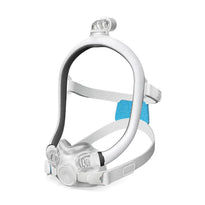
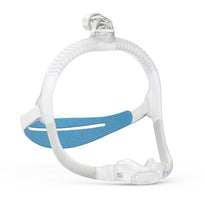
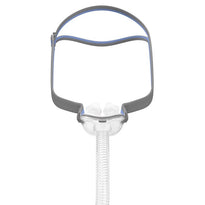
Whether you sleep on your side, breathe through your mouth, or prefer minimal coverage, our Nasal CPAP Masks, Full Face CPAP Masks and Nasal Pillow CPAP Masks come with a variety of forms to help you sleep well.
Loading products
Searching
We found 0 results for "${ search }"
Searching
We found 0 results for "${ mainSearch }"
Under this subscription contract, you agree to make regular payments to ResMed. To confirm you can meet your contractual obligations of your ResMed subscription, we will need to conduct a credit check.
For more information, please read our credit check FAQs.
Please be aware that if you submit multiple credit checks this may affect your credit score.
By clicking "Complete" you agree to the Resmed’s Privacy Statement
Verifying eligibility
Based on our credit check, you are not eligible for subscription.
Select from options below:
Bundles will be discounted at checkout
${ getSubheading }
Whether you sleep on your side, breathe through your mouth, or prefer minimal coverage, our Nasal CPAP Masks, Full Face CPAP Masks and Nasal Pillow CPAP Masks come with a variety of forms to help you sleep well.
Loading products
Nasal CPAP masks
Nasal CPAP masks cover your nose from the bridge to the area at the top of your lip. They deliver an indirect airflow and are a good choice if you need higher pressure. If you’re a restless sleeper you may prefer this type of sleep apnea mask.
They may be a problem if you’re a mouth breather unless you use a chin restraint to keep your mouth closed. If you have trouble breathing through your nose this may not be the sleep apnea mask for you.
Nasal pillows CPAP masks
Nasal pillows CPAP masks are small, compact and lightweight. They’re good for people who toss and turn in their sleep or who feel claustrophobic with a larger sleep apnea mask. Also, if you have a beard or moustache, this could be a good choice. You can easily read or watch TV while wearing a nasal pillows mask, even with glasses on.
Some people who need a higher pressure find the nasal pillows CPAP masks uncomfortable. If you’re a mouth breather you may need to add a chin restraint to keep your mouth closed.
Full face CPAP masks
Full face CPAP masks cover your mouth and nose. They’re often recommended for people who need a higher pressure as well as those who prefer to breathe through their mouth and/or have trouble breathing through their nose. If you like to sleep on your back, this could be the sleep apnea mask for you.
On the downside, full face masks are more likely to leak and/or give you dry eyes. They can be tricky to use if you wear glasses to watch TV or read in bed.
Nasal CPAP masks
Nasal CPAP masks cover your nose from the bridge to the area at the top of your lip. They deliver an indirect airflow and are a good choice if you need higher pressure. If you’re a restless sleeper you may prefer this type of sleep apnea mask.
They may be a problem if you’re a mouth breather unless you use a chin restraint to keep your mouth closed. If you have trouble breathing through your nose this may not be the sleep apnea mask for you.
Nasal pillows CPAP masks
Nasal pillows CPAP masks are small, compact and lightweight. They’re good for people who toss and turn in their sleep or who feel claustrophobic with a larger sleep apnea mask. Also, if you have a beard or moustache, this could be a good choice. You can easily read or watch TV while wearing a nasal pillows mask, even with glasses on.
Some people who need a higher pressure find the nasal pillows CPAP masks uncomfortable. If you’re a mouth breather you may need to add a chin restraint to keep your mouth closed.
Full face CPAP masks
Full face CPAP masks cover your mouth and nose. They’re often recommended for people who need a higher pressure as well as those who prefer to breathe through their mouth and/or have trouble breathing through their nose. If you like to sleep on your back, this could be the sleep apnea mask for you.
On the downside, full face masks are more likely to leak and/or give you dry eyes. They can be tricky to use if you wear glasses to watch TV or read in bed.
Nasal CPAP masks cover your nose from the bridge to the area at the top of your lip. They deliver an indirect airflow and are a good choice if you need higher pressure. If you’re a restless sleeper you may prefer this type of sleep apnea mask.
They may be a problem if you’re a mouth breather unless you use a chin restraint to keep your mouth closed. If you have trouble breathing through your nose this may not be the sleep apnea mask for you.
Nasal pillows CPAP masks are small, compact and lightweight. They’re good for people who toss and turn in their sleep or who feel claustrophobic with a larger sleep apnea mask. Also, if you have a beard or moustache, this could be a good choice. You can easily read or watch TV while wearing a nasal pillows mask, even with glasses on.
Some people who need a higher pressure find the nasal pillows CPAP masks uncomfortable. If you’re a mouth breather you may need to add a chin restraint to keep your mouth closed.
Full face CPAP masks cover your mouth and nose. They’re often recommended for people who need a higher pressure as well as those who prefer to breathe through their mouth and/or have trouble breathing through their nose. If you like to sleep on your back, this could be the sleep apnea mask for you.
On the downside, full face masks are more likely to leak and/or give you dry eyes. They can be tricky to use if you wear glasses to watch TV or read in bed.
CPAP masks generally fall into three main categories, depending on how they deliver airflow:
Mask selection should be based on clinical guidance, user comfort, and therapy requirements.
A CPAP leak refers to unintended air escaping from the mask, tubing, or other components of the therapy system. Small leaks are common, but excessive leaks can affect therapy effectiveness, comfort and may lead to dryness or noisy operation.
Leaks can result from improper mask fit, incorrect size, worn-out components, or sleeping position. Modern CPAP devices often include leak detection features to help users and clinicians monitor leak levels. Refer to your user manual or healthcare provider for troubleshooting guidance. We also have a CPAP Mask fitting guide for selected masks here
We use third-party cookies to personalise content, ads, and analyse site traffic. View our privacy policy to learn more.